
Java Weather by Month: Best Time to Visit
Java weather by month: dry and rainy seasons, October conditions and a 12-month planning table. Check BMKG sources and adapt a 7- or 15-day route.
8 min read
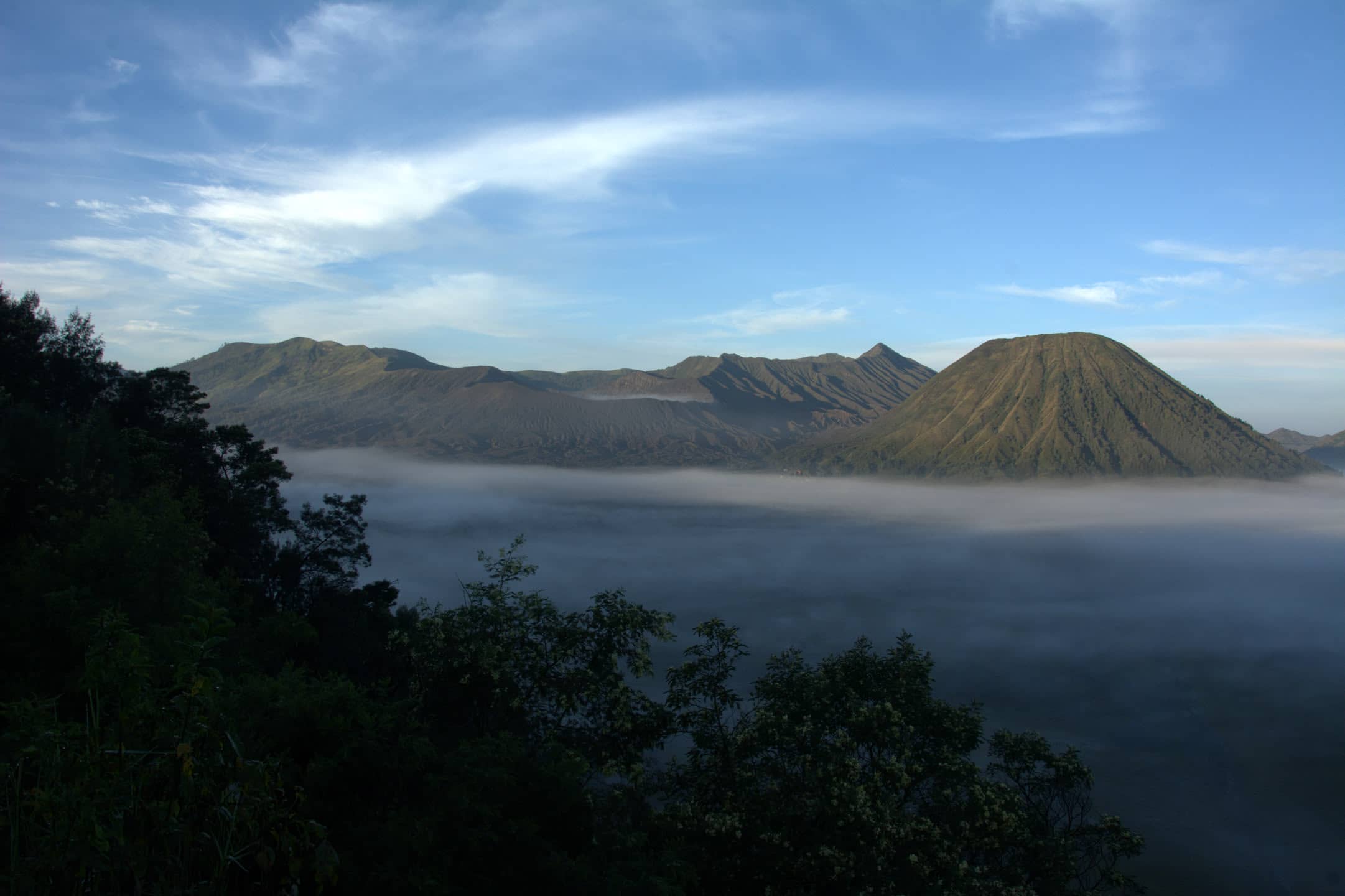
For a Java trip focused on volcanoes and outdoor sightseeing, start with April–October, the broad dry-season window. The rainy season generally runs from November to March. Indonesia's tourism ministry gives this outline with a warning about regional variation. A particular month doesn't guarantee clear mornings or park access.
May and September are two months I'd compare for a first trip; that's a planning suggestion, not a measured weather ranking. Leave flexibility around a Bromo morning, and combine Yogyakarta walks with food and museums. The table below covers every month, followed by a separate October planning section.
Java weather month by month
This table pairs the general seasonal pattern with itinerary suggestions. It isn't a local forecast or a table of measured rainfall totals.
| Month | Broad seasonal pattern | How I'd plan the trip |
|---|---|---|
| January | Rainy season | Keep city days flexible; avoid a tight connection after a mountain outing. |
| February | Rainy season | Give a priority volcano visit a spare morning. |
| March | Rainy season | Check the current forecast before committing to outdoor days. |
| April | Within the general dry-season window; timing varies | Keep rain gear handy and allow changes to the route. |
| May | Dry-season window | A month I'd compare for a first volcano-focused trip. |
| June | Dry-season window | Check mountain conditions separately from the city forecast. |
| July | Dry-season window | Pack warm layers for a pre-dawn viewpoint, even with warm city days. |
| August | Dry-season window | Leave a spare morning near your priority view and check park access. |
| September | Dry-season window | Another month I'd compare; check holiday and event dates. |
| October | Late in the general dry-season window | Check the regions on your route and leave room to swap a mountain day with city time. |
| November | Rainy-season window | Leave room to move a mountain visit within your stay. |
| December | Rainy season | Check holiday transport and keep an indoor option for wet days. |
Rain doesn't follow a reliable afternoon timetable. Don't build a route around an assumed number of dry hours each morning.
Use the free Java route planner for 7 or 15 days to adjust stop order and days. Once you've chosen your month, add spare time around the outdoor visit you care about most and check whether the whole plan fits your holiday.
Java dry season: April–October
April–October is Java's broad dry-season window. That makes it a starting point for choosing dates when Bromo, Ijen or other outdoor visits are your priority. It doesn't mean every day is dry: the tourism ministry's climate guide stresses regional variation, and higher ground is cooler than the lowlands.
Choose the mountain visit you care about most, then check how many nights you can spend nearby. A route with several volcanoes on consecutive nights leaves little room to move an outing or recover sleep. Check transport and current entry rules in the Bromo planning guide before fixing the next train.
Java in September
September sits within that general dry-season window. It's a month to compare if outdoor sightseeing is the reason for your trip, without assuming lower prices, smaller crowds or a clear sunrise. Start with your priority mountain, then fit city time and transfers around it. The free East Java guide sample shows how the places connect; use it to decide which stops belong in your holiday before booking them all.
Java rainy season: November–March
November–March is the broad rainy-season window. Use that as a reason to build flexibility into the trip, rather than assuming that every attraction closes or that rain only falls in the afternoon. Conditions and access need checking for each place and date.
Put a city day beside an outdoor day so you have something useful to swap. The Yogyakarta itinerary and map helps with that part of the route. A rainy day doesn't make a waterfall canyon a suitable alternative to a mountain visit: check local guidance for the specific outing. Confirm a Karimunjawa sailing with its operator separately from a city weather forecast.
Java in February
February falls within the general rainy-season window. If your only reason for travelling is a particular volcano view, compare a dry-season date before committing. If February is fixed, choose fewer essential outdoor stops and leave room to move them. A spare morning gives you another planning option; it cannot guarantee visibility or permission to enter. Keep the onward journey flexible enough that moving an outing doesn't cost you your next connection.
Java in October: how to plan your trip
Consider October if you can move outdoor outings within your stay. It falls late in the general dry-season window, but the onset of the rainy season varies by region and year. Check the places on your actual route separately: a Yogyakarta forecast doesn't describe a morning on Bromo.
Leave 1 spare morning near Bromo. At Tumpak Sewu, decide separately about the upper viewpoint and a canyon descent after checking local conditions. In Yogyakarta, keep a museum or food-focused city day that you can swap with an outing when the forecast calls for a change. Carry rain protection, and choose accommodation that leaves time for sleep before a mountain morning.
Separately: BMKG's 2026/2027 seasonal outlook
Sources checked 16 October 2026: BMKG's national outlook, published 2 October, expects a later-than-normal onset in much of Indonesia, with many zones entering the rainy season in November or December. BMKG's Central Java province forecast, published 30 September, places the general onset there in November–December, with the peak generally in January–February 2027.
The second forecast covers Central Java province, not Yogyakarta or East Java's Bromo and Malang. Use the seasonal outlook to choose a travel window, then local forecasts closer to departure to arrange individual days. A later seasonal onset doesn't mean October will be rain-free.
Bromo, Ijen and waterfalls: leave room to change plans
Bromo and Ijen: a dry-season date cannot guarantee visibility, blue fire or permission to enter. If a mountain visit is the reason for your trip, leave a spare morning and avoid booking a tight onward connection immediately afterwards. Check the current park announcement independently of the weather.
The independent Bromo guide covers transport, choosing a base and separately dated access restrictions. Ijen reopened on 28 September; our Ijen status checked on 20 October links the announcement and remaining scheduled closures. Check for newer notices before your own visit.
Tumpak Sewu, Dieng and Semeru: check conditions and access for the specific route you intend to take. A waterfall viewpoint and a canyon descent are different outings. Keep a city activity available if the outdoor plan changes. For Karimunjawa, confirm the sailing with the operator before arranging your onward connection.
Pack warm layers for mountain mornings, even when your city days feel hot. I'd bring a warm layer, wind-resistant outer layer, hat and gloves for a pre-dawn viewpoint, plus rain protection and a dry bag for electronics. Check the forecast for the viewpoint rather than using a lowland city temperature.
A simple planner for your dates
Weather helps you choose the pace of a trip, but you still need to account for travel between stops. Decide which outing you could drop if a night hike has to move.
| Your trip | Start here | Keep this flexible |
|---|---|---|
| Around a week, Yogyakarta and eastern Java | Two or three days in Yogyakarta, then choose a Bromo base | A second volcano; do not fit it in at the expense of sleep and onward travel |
| A longer journey across the island | Train connections and overnight stops | An outdoor day you can exchange for a quieter stay |
| November–December around an event | Fix the dates for JAFF or Borobudur Marathon first | Sightseeing before and afterwards; a forecast does not move a ticket date |
These are route suggestions, not a forecast for a particular day. Put spare time beside the mountain stay, then check transfers separately. The linked route planner lets you allocate days; it doesn't calculate travel times or forecast weather.
- Pick your priority: volcanoes, city time or a dated event. For a fixed-date trip, start with the Borobudur Marathon guide or JAFF guide, then fit the rest around it.
- Check the current holiday calendar before paying for transport, especially Ramadan and Lebaran (Idul Fitri). For a stay during Ramadan, ask your accommodation about breakfast and evening meal options before planning the day's outings.
- Look at actual train availability and room prices for your dates. The Java train guide explains the booking options.
- Leave a spare morning near the outdoor visit you care about most, then recheck forecasts and access notices before departure.
From a weather window to a booked route
Once you've chosen your month, work through the journey from Yogyakarta towards Bromo, Ijen and the ferry to Bali. Check the travel between stops before filling every day with an outing. The Java itinerary guide gives you another way to compare the sequence.
The paid Volume 1: East Java — English PDF guide covers transport, places to stay and practical preparation along this route. Read the free sample first, then check the contents and current price in the shop to see whether it covers your trip. The PDF is a planning guide; recheck weather forecasts and park notices for your own travel dates.
FAQ
When is the best time to visit Java?
For a trip with mountain mornings, start with April–October, the broad dry-season window. Leave 1 spare morning near your priority viewpoint and check the local forecast; the season's onset and end vary by region.
When are Java's dry and rainy seasons?
The broad pattern is dry April–October and rainy November–March. BMKG's 2026/2027 outlook forecasts a later onset in many regions. Check that the forecast covers the place you plan to visit.
Is October a good time to visit Java?
October falls late in the broad dry-season window. Keep 1 spare morning near Bromo and a city day you can swap with an outdoor outing. Before travelling, check forecasts for your actual route and park access notices.
What should I pack for Bromo before dawn?
Plan 3 layers: a base layer, a warm layer and a wind-resistant outer layer, plus a hat and gloves. Higher elevations are cooler than the lowlands; check the forecast for your actual viewpoint and date.